Get in your inbox the latest News and Offers from
- Dallas Texas, US

- Office Time:
- Monday to Friday 9:00am - 6:00pm
- Call Us:
- +1 (408) 675-6503
- Email:
- contact@wainsbillingsolutions.com
The Importance of Revenue Cycle Management in Healthcare
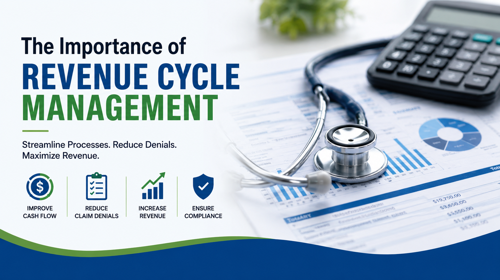
The Importance of Revenue Cycle Management in Healthcare
In today's rapidly evolving healthcare environment, maintaining financial stability has become increasingly challenging for healthcare providers. Complex insurance requirements, changing reimbursement regulations, claim denials, and administrative inefficiencies can significantly impact the financial performance of medical practices and healthcare organizations. Revenue Cycle Management (RCM) plays a critical role in helping healthcare providers streamline financial operations, improve cash flow, and maintain long-term operational success.
Revenue Cycle Management refers to the complete financial process associated with patient care, beginning with patient registration and ending with final payment collection. An efficient RCM system ensures that healthcare providers receive accurate and timely reimbursement for the services they deliver while minimizing administrative burdens and financial disruptions.
Understanding Revenue Cycle Management
The healthcare revenue cycle involves several interconnected processes that directly influence reimbursement accuracy and financial performance. These processes include patient registration, insurance verification, medical coding, claim submission, payment posting, denial management, and accounts receivable follow-up. Each stage of the cycle must be managed accurately and efficiently to ensure smooth reimbursement operations.
Even minor errors in coding, documentation, or insurance verification can result in claim denials, delayed payments, and increased administrative costs. This is why healthcare organizations rely on structured revenue cycle management strategies to maintain operational efficiency and financial stability.
Why Revenue Cycle Management Matters
Effective revenue cycle management is essential for healthcare organizations of all sizes. A well-managed revenue cycle improves reimbursement timelines, reduces billing errors, minimizes claim denials, and enhances cash flow. It also allows healthcare providers to focus more on delivering quality patient care rather than dealing with administrative complications.
Healthcare organizations that implement strong RCM practices benefit from:
- Faster reimbursement processing
- Improved cash flow and collections
- Reduced claim denials and payment delays
- Enhanced billing accuracy
- Better compliance with payer requirements
- Increased operational efficiency
- Improved patient financial experience
By optimizing revenue cycle operations, healthcare providers can strengthen their financial performance and maintain greater control over administrative processes.
Common Revenue Cycle Challenges
Healthcare providers often face several challenges when managing their revenue cycle. Insurance eligibility issues, coding inaccuracies, incomplete documentation, payer-specific requirements, and changing healthcare regulations can create significant billing complications.
Some of the most common revenue cycle challenges include:
- Claim denials and rejections
- Delayed reimbursements
- Inaccurate patient information
- Coding and billing errors
- Inefficient claims processing
- Outstanding accounts receivable
- Regulatory compliance concerns
Without a structured management process, these issues can negatively impact revenue generation and operational productivity.
The Role of Technology in Revenue Cycle Management
Modern healthcare organizations increasingly rely on advanced technology solutions to improve revenue cycle performance. Automated billing systems, electronic health records (EHR), claims management software, and analytics tools help streamline workflows and reduce manual processing errors.
Technology-driven revenue cycle management provides several advantages, including:
- Real-time insurance verification
- Automated claims submission
- Faster payment posting
- Improved reporting and analytics
- Enhanced denial tracking and prevention
- Reduced administrative workload
By integrating technology into billing operations, healthcare providers can improve efficiency, reduce operational costs, and strengthen reimbursement accuracy.
Denial Prevention and Revenue Optimization
One of the most important aspects of revenue cycle management is denial prevention. Claim denials can significantly disrupt cash flow and increase administrative burdens for healthcare organizations. Proactive denial management strategies help identify billing issues early, improve claim accuracy, and reduce preventable denials.
Successful denial prevention includes:
- Accurate medical coding
- Thorough documentation review
- Insurance eligibility verification
- Timely claim submission
- Consistent payer follow-up
- Detailed denial analysis
By reducing denied claims and improving reimbursement rates, healthcare organizations can maximize revenue opportunities and maintain healthier financial performance.
Improving the Patient Financial Experience
Revenue cycle management not only impacts healthcare providers but also influences the patient experience. Clear billing communication, accurate eligibility verification, and transparent financial processes help reduce patient confusion and improve satisfaction.
Patients are more likely to trust healthcare providers that offer:
- Transparent billing procedures
- Accurate insurance verification
- Clear payment expectations
- Efficient claims handling
- Responsive billing support
An organized and patient-focused revenue cycle process contributes to stronger patient relationships and improved overall healthcare experiences.
Conclusion
Revenue Cycle Management is a fundamental component of a successful healthcare organization. By implementing structured billing processes, proactive denial management strategies, accurate coding practices, and technology-driven solutions, healthcare providers can improve operational efficiency, strengthen financial performance, and maintain consistent cash flow.
As the healthcare industry continues to evolve, organizations that prioritize effective revenue cycle management will be better positioned to reduce administrative burdens, optimize reimbursement outcomes, and focus on delivering high-quality patient care. Investing in efficient RCM processes is not only essential for financial success but also critical for supporting long-term operational stability and growth within the healthcare industry.